
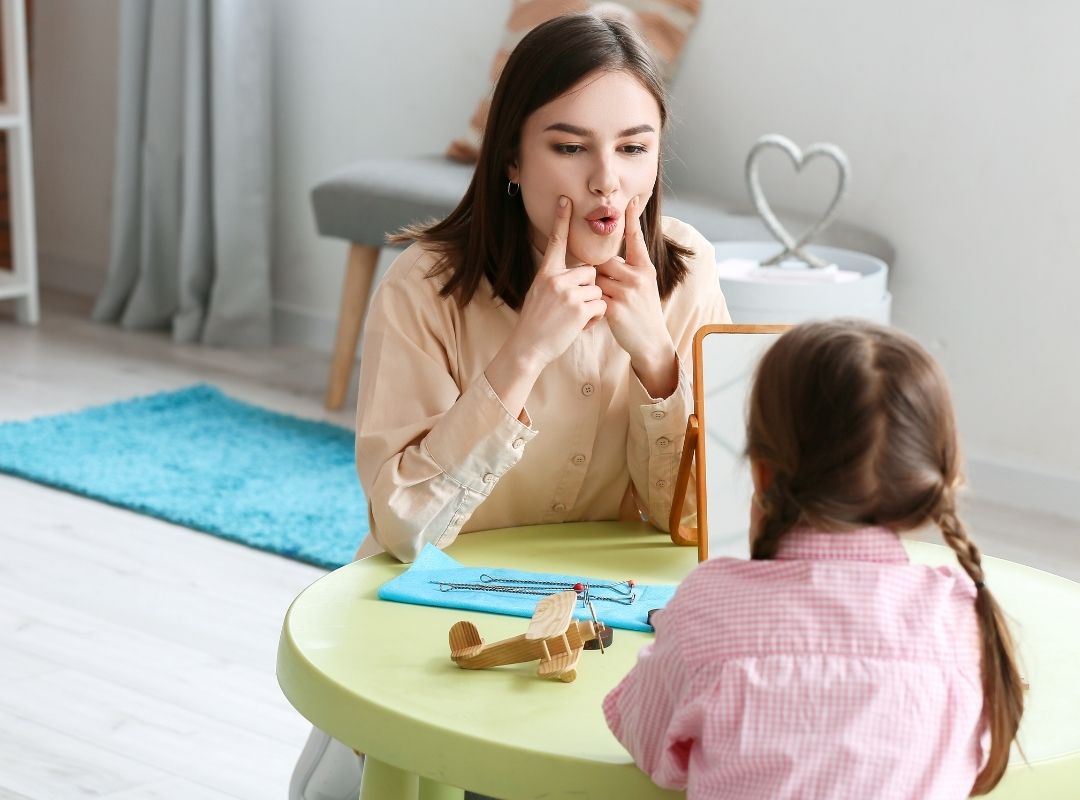
Children share their thoughts and needs in many ways. Speech may be one part of communication, alongside gestures, facial expressions, pictures, writing, signs or a communication device. Paying attention to your child’s preferred ways of communicating helps you recognise more of what they are telling you.
Everyday moments offer opportunities to connect. You do not need to turn family time into a lesson. Begin with an interaction your child enjoys and make space for their contribution.
Follow an interest
Notice what your child is doing or looking at. Join a comfortable activity and comment on something you both notice. If they are arranging toy animals, you might mention where an animal has gone, then pause.
Try to keep the interaction enjoyable. Repeated questions can make an ordinary conversation feel demanding. Your child might want to share an idea, play quietly together or take a break.
Leave time for the response
After saying something, allow a pause. Your child may need time to understand, decide what they want to express or use their communication system. Watch for responses through movement, gesture or other methods as well as words. Read more Parenting Resources.
If you are uncertain, check gently: ‘Are you showing me this one?’ Give them a way to correct you. Avoid rushing to finish their message; the goal is to understand what they mean.
Make your own message accessible
Match your message to what your child understands. For an everyday task, a brief, concrete explanation may be easier to follow than a long instruction. Pictures, familiar objects or gestures may also help.
For example, showing the bag while describing the next step might be useful before leaving home. If your child does not understand, try another way rather than simply repeating the same words louder. A speech pathologist can help you explore suitable supports.
Respect different ways of communicating
Augmentative and alternative communication, or AAC, includes methods that support or provide an alternative to speech. It can include signs, communication books and devices. A person’s system is individual, and professional advice can help families choose and use appropriate supports.
If your child already uses AAC, ask their speech pathologist how to make it accessible during everyday activities. Treat messages through that system as meaningful communication. Respond to the child directly and keep their preferred method available.
Choose a comfortable setting
Consider whether noise, lighting or competing activities are making the interaction harder. A quieter place or a comfortable shared activity may help. Show you are listening in ways your child finds comfortable; you do not need to require eye contact.
Older children may prefer to talk while doing something alongside you. You can ask when they would like to chat and respect a request for time or space.
Acknowledge the message before solving the problem
When your child expresses frustration or disappointment, first check what they are communicating. You might say: ‘It sounds like that was difficult. Have I understood?’ Adjust your response if they correct you.
Sometimes listening is the support they want. At other times, they may want help deciding what to do next. Ask whether they would like ideas, and keep the conversation suited to their age and understanding.
When to ask for advice
If you have concerns about communication, understanding or participation, speak with your GP, child and family health nurse or ask about support at RM Therapy. You can seek advice without having to decide on a diagnosis yourself.
At RM Therapy, you can ask about speech pathology and the support available for your child and family. Our team can explain the next steps, current availability and fees or funding requirements. These ideas are general education; personalised advice will depend on your child’s needs.
References
1. Raising Children Network — Communicating Well with Children https://raisingchildren.net.au/toddlers/connecting-communicating/communicating/communicating-well-with-children
2. Speech Pathology Australia — Communication Partners https://www.speechpathologyaustralia.org.au/Communication_Hub/Supporting-communication/Tips_for_communication_partners.aspx
3. Speech Pathology Australia — Augmentative and Alternative Communication (AAC) https://www.speechpathologyaustralia.org.au/Communication_Hub/Resources/Fact_Sheets/Augmentative-and-Alternative-Communication.aspx
4. Raising Children Network — Talking and Listening to Preschoolers https://raisingchildren.net.au/preschoolers/connecting-communicating/communicating/talking-listening-to-preschoolers